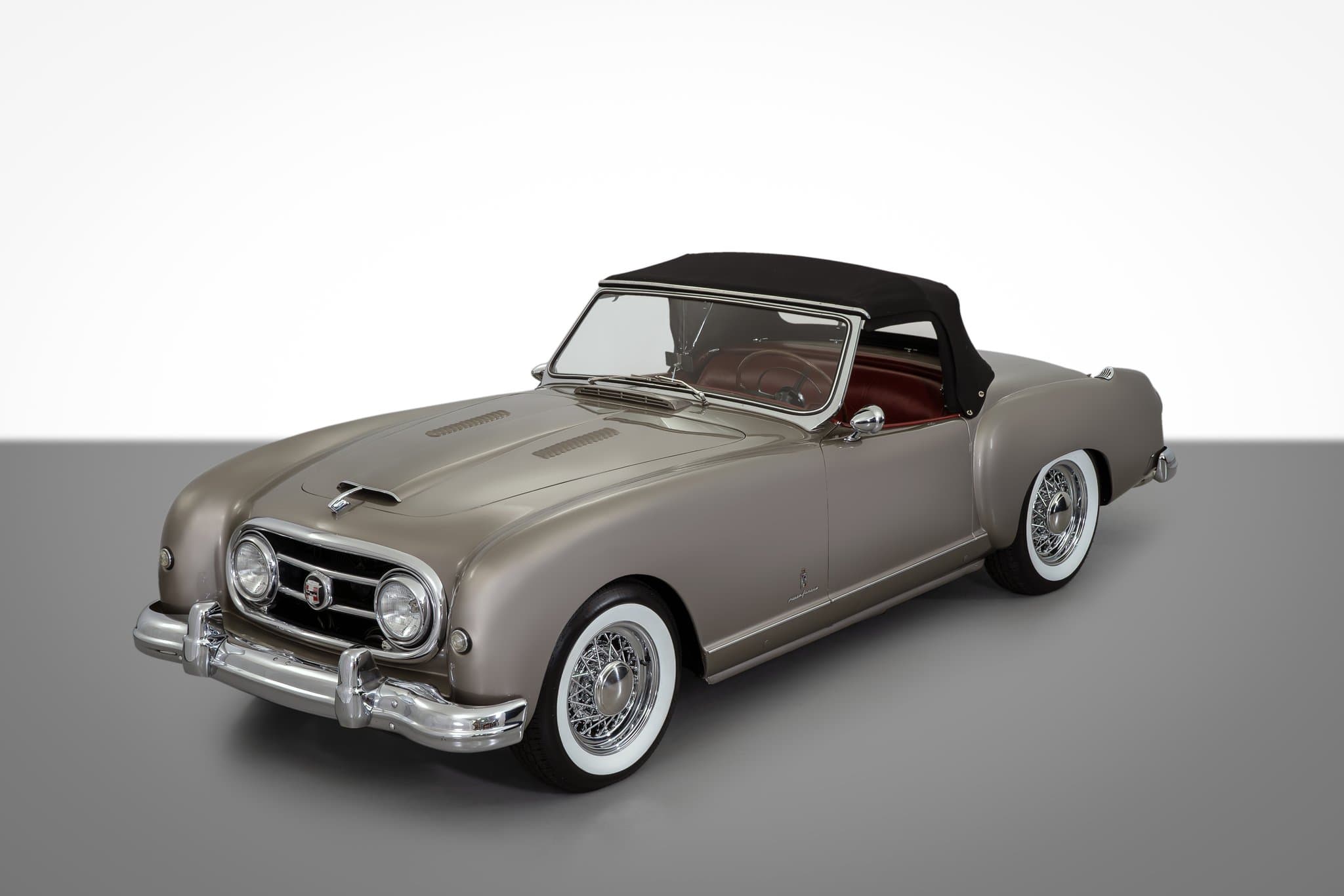
1952 Nash-Healey Roadster: the full story
Born from a transatlantic partnership between Nash-Kelvinator president George W. Mason and British automaker Donald Healey, with trend setting design refinement by Italian coachbuilder Pininfarina, the 1952 Nash-Healey is a blend of rarity, elegance, and innovation. It is a remarkable example of early international co-development in the automotive world, long before such partnerships became common.
Dubbed “America’s second post-war sports car,” the Nash-Healey was an exclusive and elite offering, with only 506 Nash-Healeys produced between 1951 and 1954. Drivetrains were built by Nash-Kelvinator in Wisconsin, chassis and suspension by the Donald Healey Motor Company in Warwick, England, and the bodywork was fashioned in Turin by the legendary Pininfarina. This particular restoration embodies the spirit of innovation and global synergy that defined the model while benefiting from tasteful and performance-minded upgrades.
Originally powered by a 6-cylinder engine, this Nash-Healey features a rare and well-executed V8 conversion, now equipped with a naturally aspirated Chevrolet 327 cid “Mighty Mouse” V8 (L7), delivering reliable power while preserving the car’s original design intent. More specifically, it features the L76 high-performance top-end, a carbureted version of the 327 that produced 365 horsepower at 3,200 RPM. It was believed to be a factory attempt to produce a more powerful V8 punch.
The 1952 model year introduced several key design updates to the original 1951 Nash-Healey: a one-piece curved windshield, grill-mounted headlights, and distinctive rear fins, giving the roadster more visual continuity with Nash’s domestic lineup. These changes came with steel-and-aluminum construction, reducing curb weight and subtly improving dynamics.
The restoration respects the car’s heritage. The crisp lines, graceful proportions, and mid-century finishes remain intact. Meanwhile the mechanical upgrades address Nash Healey's only original shortcoming: its underwhelming factory performance. The rebuilt engine, transmission, and rear differential, as well as the 4 wheel disc brake conversion, vastly improved its drivability. The result is a roadster that not only looks like a mid-century dream but drives like the grand tourer it was always meant to be.
Today, this 1952 Nash-Healey stands as a rolling sculpture and performance statement, blending timeless Pininfarina beauty with dependable American muscle. It is a significant and rare machine (fewer than 150 were produced in 1952) with classic proportions and unmistakable flair. Preserved as close to the original as possible, it represents the spirit of bold collaboration, creative design, and a glorious chapter in global motoring history. Due to the exceptional cost associated with international build and assembly, few units were built and sold (and none profitably). The Nash-Healey dream died in 1954. Truly the first American sports coupe, predating the Corvette.