1974 Volkswagen Kombi: the full story
If one vehicle encapsulates the free-spirited optimism of the early 1970s, it is the second-generation Volkswagen Type 2, also known as the “Kombi.” Originally envisioned by Dutch VW importer Ben Pon and derived from the Beetle, the first generation T1 was conceived in 1950 as a practical commercial vehicle. Introduced in late 1967, the T2 replaced the original microbus’s split windshield with a bay window panel, adopted a longer body, and featured numerous mechanical and safety improvements. It quickly became an international icon, serving as everything from a family transporter and camper to a delivery van and enduring symbol of freedom and adventure. During the Woodstock era and beyond, countless flower children took to the open road behind the wheel of a Kombi. As those carefree adventurers grew into families, the Kombi did with them, offering the perfect blend of counterculture cool and everyday practicality.
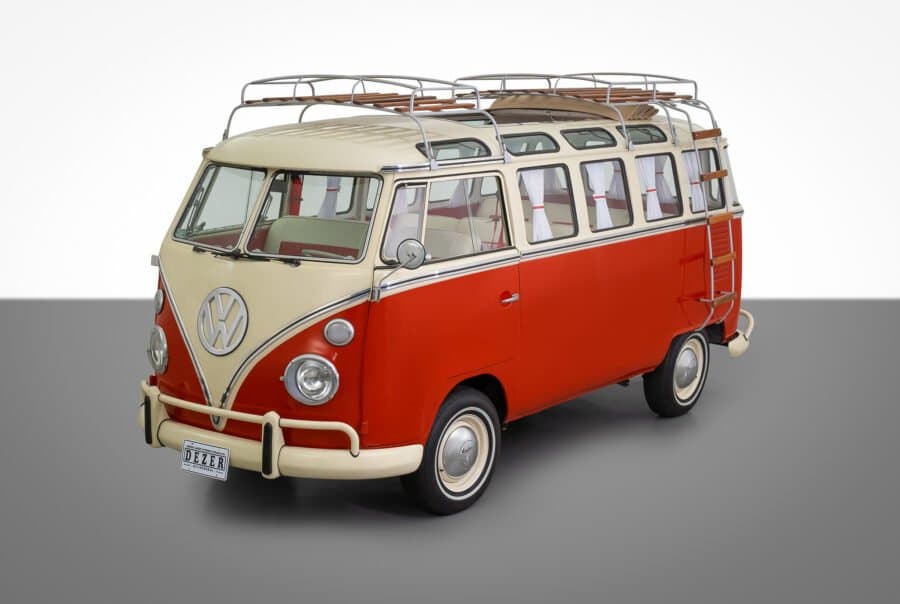
By 1974, the T2 had evolved into Volkswagen's most refined and versatile bus yet, while retaining the simple engineering and unmistakable character that made the original so beloved. This particular Volkswagen Kombi includes a host of desirable features. Finished in the sought-after 23-window Samba configuration, it surrounds passengers with panoramic glass that welcomes the sunshine, while a ragtop sunroof, rooftop cargo racks, and an access ladder complete the quintessential adventure-ready look.
The cabin is delightfully minimal. Dashboard controls are limited to just the essentials, with two simple gauges and a radio, while the horizontally mounted steering wheel and flat front end provide the unmistakable sensation of piloting a classic bus. Inside are three rows of seating, providing ample room for family and friends. A three-door layout with a rear clamshell hatch makes loading passengers and cargo remarkably easy, while the safari windshields swing open to welcome the breeze on every journey.
This Kombi is powered by Volkswagen's dependable 1,500 cc air-cooled, rear-mounted flat-four engine, retaining its original drivetrain and paired with its original 4-speed manual transmission driving the rear wheels. Upgraded to a 12-volt electrical system, the Kombi delivers the simple, engaging driving experience that has endeared it to generations of enthusiasts. While never intended to be a high-performance machine, its mechanical simplicity, ease of maintenance, and practical engineering remain central to its lasting appeal.
The Kombi's greatest strength has always been its versatility. Around the world it served as a camper, family transporter, delivery van, ambulance, and mobile business, with countless custom conversions reflecting the personalities of their owners. Few vehicles have been embraced by so many different cultures and lifestyles while remaining instantly recognizable. Before SUVs, cargo vans, and modern minivans became household staples, the Volkswagen Kombi demonstrated just how practical and enjoyable a multi-purpose vehicle could be.
More than fifty years after this 1974 model left the factory, the Volkswagen Kombi remains the definitive symbol of community and adventure. Affectionately known as the "hippie van,” it became the defining vehicle of the 1960s and 1970s counterculture, carrying festivalgoers to
Woodstock, appearing on album artwork by artists such as Bob Dylan and The Beach Boys, and transporting Grateful Dead fans from show to show.
Produced from 1967 to 1979, the Type 2 was one of the pioneers of the modern passenger and cargo van, inspiring American competitors such as the Ford Econoline, Dodge A100, and Chevrolet Corvair 95. One of approximately 82,800 Kombis produced worldwide in 1974, this microbus has cemented its place as one of the most influential utility vehicles ever built. Today, it serves as the perfect centerpiece for classic car shows, vintage festivals, and gatherings celebrating the free-spirited culture of the era.